

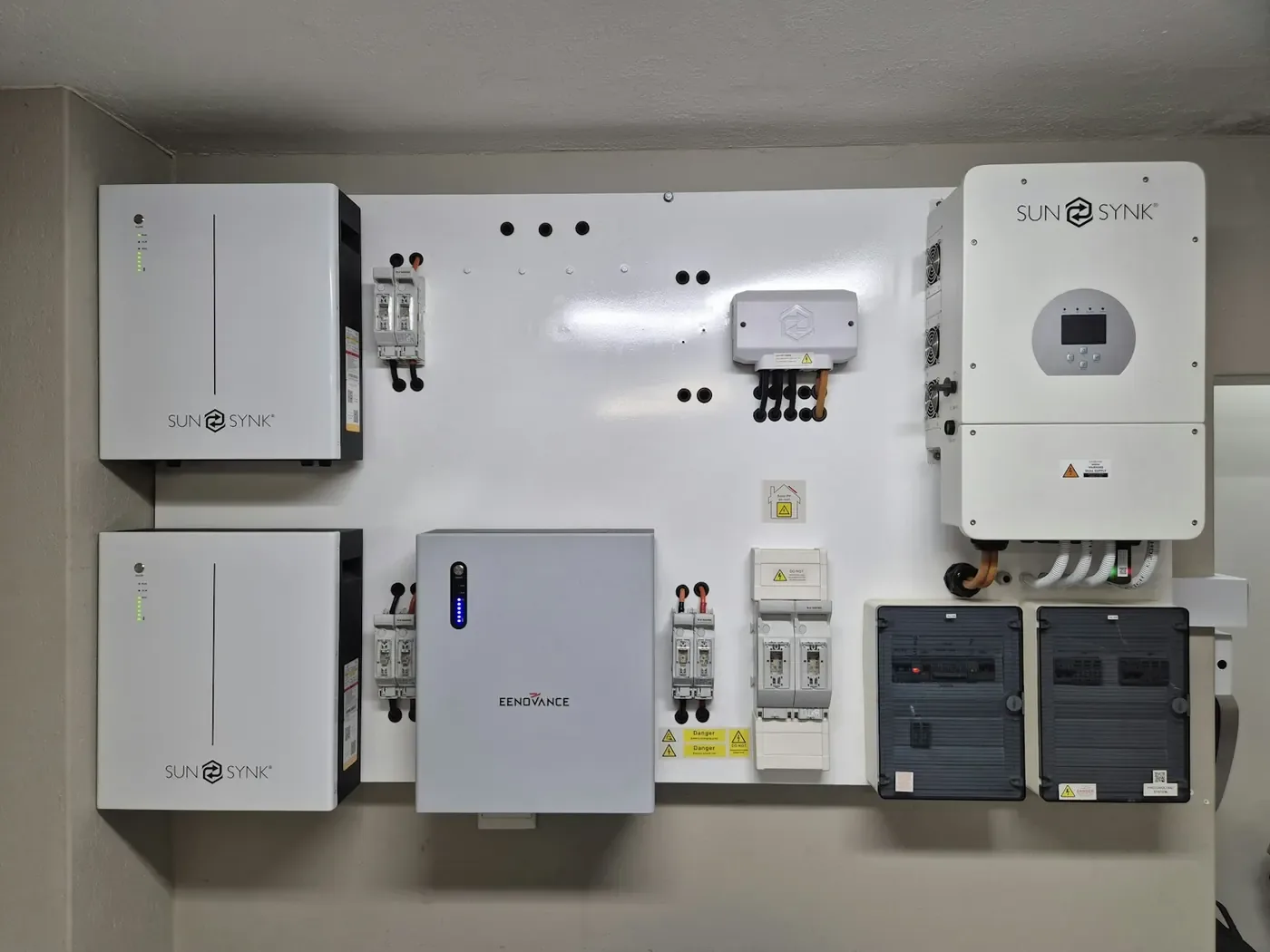
Batteries are often the most expensive part of a backup system, so choosing the right chemistry matters. Here is how the two most common options compare.
Usable capacity
Lead-acid batteries should not be discharged much below 50% if you want them to last. Lithium iron phosphate (LiFePO4) batteries can typically use 80–90% of their rated capacity. A 10 kWh lithium bank therefore delivers far more usable energy than a 10 kWh lead-acid bank.
Lifespan
Quality LiFePO4 batteries are commonly rated for 6,000 or more cycles — often more than a decade of daily use. Lead-acid batteries in daily cycling may need replacing within a few years.
Maintenance and space
Lithium batteries are sealed, compact and maintenance-free, with built-in battery management systems. Flooded lead-acid batteries need ventilation and periodic topping up.
Cost over time
Lead-acid is cheaper upfront, but once you account for usable capacity and replacements, lithium usually costs less per kWh delivered over the life of the system.
Our recommendation
For most homes and businesses cycling batteries daily, lithium is the better investment. Learn more about our energy storage solutions.